

 English
 中文简体
中文简体Don't hesitate to send a message
Elevate your welding projects with our Sturdy Copper Welding Rod, designed to deliver good perfo...
Copper welding rods are essential consumables engineered to facilitate strong, durable, and reliable connections in copper-based metalworking projects. These rods serve as filler materials, designed to bond copper components through various welding techniques while preserving the innate properties of copper, such as its good electrical conductivity, thermal efficiency, and corrosion resistance. Their versatility makes them a staple in industries ranging from electrical systems and plumbing to industrial fabrication and repair.
Copper welding rods are primarily used to join copper-to-copper connections or to weld copper to other compatible metals. They find applications in environments where maintaining the electrical and thermal properties of copper is important, such as in power distribution systems, electronics, and HVAC components. The rods are also utilized in plumbing and architectural applications, ensuring secure and long-lasting bonds in piping systems and decorative elements.
The rods are developed with specific compositions to enhance performance for different welding methods and applications. Some rods include deoxidizing agents to prevent oxidation during welding, while others may have flux coatings or be flux-cored to simplify the welding process and improve joint quality. These features make the rods suitable for techniques such as TIG (Tungsten Inert Gas), MIG (Metal Inert Gas), and oxy-acetylene welding, catering to both professional fabricators and DIY users.
A key advantage of copper welding rods is their ability to produce clean, defect-free welds with little post-processing. This ensures that the resulting joints maintain the structural integrity, electrical conductivity, and aesthetic appeal required for high-performance applications. The rods’ adaptability to various joint designs and material thicknesses further broadens their utility across diverse projects.
Copper welding rods are indispensable tools for achieving precision and reliability in metal fabrication. Their role in maintaining the unique properties of copper while ensuring strong and durable connections makes them a vital component in industries where performance, efficiency, and durability are non-negotiable. Whether used in critical infrastructure, industrial equipment, or everyday applications, these rods enable the creation of robust and enduring metal assemblies, bridging functionality and craftsmanship seamlessly.
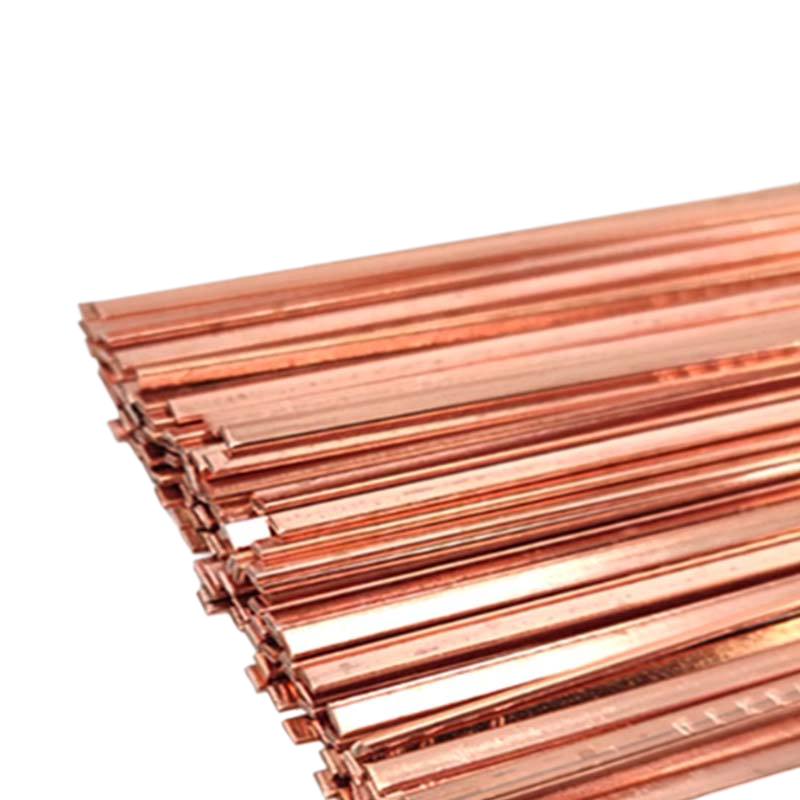
Elevate your welding projects with our Sturdy Copper Welding Rod, designed to deliver good perfo...

Inside a Welding Goggles Factory A welding goggles factory is a fascinating space where safety meets precision. Workers and machines collaborate to produce goggles that protect eye...
READ MORETIG welding torch factories are central to supplying precise welding equipment for industrial, automotive, and construction applications. Production begins with careful selection o...
READ MOREA Welding Rod Supplier occupies a central position within the metal joining industry. Welding rods, also known as electrodes, form the core consumable element in many welding proce...
READ MOREHeat-Resistant Welding Gloves remain a fundamental part of equipment in fabrication shops, construction sites, and metal repair facilities. In environments where sparks fly and mol...
READ MORECopper welding rods are a commonly used welding material, primarily for welding copper and copper alloy materials. Due to copper's good conductivity, thermal conductivity, and corrosion resistance, copper welding plays a vital role in electrical equipment, pipelines, heat exchangers, and in decorative and mechanical manufacturing.
Based on different welding methods and materials, copper welding rods are mainly divided into the following categories:
Pure copper welding rods have a high copper content and are suitable for welding copper to copper. The weld seam has good conductivity, making them suitable for welding electrical conductors, busbars, and copper pipes. They require a higher welding temperature, but the weld strength meets general mechanical and electrical requirements.
Copper-nickel welding rods contain a certain proportion of nickel, which enhances the strength and corrosion resistance of the weld seam. They are suitable for welding marine equipment, chemical pipelines, and corrosion-resistant copper alloy materials. Heat input needs to be controlled during welding to avoid weld cracking.
Copper-tin welding rods are mainly used for low-temperature or soft soldering applications, such as welding pipe joints and decorative parts. The weld seam is easy to flow and fill gaps, and the welding operation is relatively simple.
Copper-aluminum welding rods are suitable for dissimilar metal welding between copper and aluminum, typically used in electrical connections and radiator manufacturing. Appropriate flux and protective measures are required during the welding process to improve weld quality.
Copper welding rods maintain good conductivity and thermal conductivity after welding, providing stable performance in electrical and heat exchange applications. Pure copper welding rods have the good conductivity and are suitable for high-current conductor welding.
Copper and copper alloy weld seams can resist corrosion in more acidic and alkaline environments. Copper-nickel welding rods perform particularly well in seawater environments, making them suitable for shipbuilding and marine equipment welding.
Copper welding rods provide appropriate strength and toughness, and the weld seam performs stably under tensile and impact loads. Copper-nickel and copper-aluminum welding rods have higher strength than pure copper welding rods, making them suitable for structural components that bear certain mechanical loads.
Copper welding rods can be used with various welding methods, such as gas welding, TIG welding, and manual welding. Selecting the appropriate welding rod based on the welding material and application scenario ensures successful welding.
High-quality copper welding rods produce smooth and uniform welds with good bead formation, reducing subsequent grinding and surface treatment work. Copper-tin welding rods are particularly suitable for low-temperature welding, offering good weld fillability.
Copper welding rods are widely used for welding busbars, switchgear, and electrical connectors. The welds have stable conductivity, ensuring reliable current transmission.
Copper welding rods can be used for welding water pipes, refrigeration pipelines, and heat exchangers. The welds have good sealing properties, preventing leaks and ensuring safe fluid transport.
Copper welding rods are used for welding mechanical parts and decorative components. The weld strength and appearance meet mechanical and decorative requirements while maintaining the original luster of the copper material.
Copper-nickel welding rods are suitable for welding ship components and marine equipment. They resist seawater corrosion and salt spray erosion, extending equipment lifespan.
Copper welding rods are used for welding precision electronic components and electrical contacts. The welding process is stable, and the welds have low resistance, meeting high-precision electrical requirements.
The chemical composition of the welding rod should match the base metal. For example, pure copper base metal should use pure copper welding rods, while copper-nickel or copper-aluminum alloy base metals should use corresponding welding rods to ensure weld strength and corrosion resistance.
TIG welding is suitable for thin-diameter welding rods, while gas welding and manual welding can use thicker welding rods to ensure weld fillability and smooth welding.
In seawater or corrosive environments, copper-nickel welding rods should be selected; for low-temperature or room-temperature welding applications, copper-tin welding rods can be chosen to ensure weld fluidity and formability.
For structural components requiring high weld strength, high-strength copper alloy welding rods should be selected; for decorative components requiring a high-quality appearance, welding rods with good formability and smooth welds should be chosen.
Before welding, remove oxide layers, oil stains, and impurities from the surface of the base metal to ensure weld quality.
Copper conducts heat quickly, so pay attention to controlling the current, voltage, and welding speed during welding to avoid overheating the weld or deforming the base metal.
In TIG welding or gas welding, using shielding gas or flux can prevent weld oxidation and porosity.
For welding thick copper plates, appropriate preheating can reduce weld cracking and stress concentration. Post-weld heat treatment may be necessary to stabilize weld properties.
For large areas or complex structures, use multi-layer welding and symmetrical welding sequences to reduce welding deformation and improve weld quality.
Copper brazing rods are of irreplaceable importance in industrial and precision manufacturing. Choosing the appropriate copper brazing rod based on different base metal types, welding methods, and application environments can ensure weld strength, conductivity, corrosion resistance, and appearance quality. Mastering the types, properties, application fields, and welding techniques of copper brazing rods helps welding engineers and operators achieve high-quality and efficient welding operations. At the same time, rationally controlling welding heat input, cleaning procedures, and welding sequence can effectively extend the lifespan of welded parts and improve overall safety.

Email:
siogeewelding@gmail.com
Whatsapp:
+86 13305885557
Phone:
+86 17377705924
Get In Touch
Product Center
Get In Touch
