

 English
 中文简体
中文简体Don't hesitate to send a message
Elevate your safety and performance with our Heat-Resistant Cowhide Welding Gloves, meticulously...
Welding gloves are essential personal protective equipment (PPE) meticulously designed to safeguard welders from the inherent risks of welding, cutting, and allied industrial processes. Crafted from heat-resistant, durable materials, these gloves serve as the one line of defense against thermal exposure, molten metal spatter, sharp edges, and mechanical abrasion. Unlike generic hand protection, welding gloves are engineered with specialized features to address the unique demands of high-temperature environments while maintaining ergonomic functionality.
Primarily, these gloves prioritize thermal insulation, utilizing materials like good-quality leather or composites that withstand harsh heat without compromising structural integrity. Reinforced stitching and layered construction enhance durability, protecting welders from sparks, slag, and accidental impacts. The incorporation of ergonomic designs ensures a secure fit without sacrificing flexibility, allowing precise control of welding tools and equipment. Versatility is a hallmark of welding gloves, as they are tailored to accommodate various welding techniques—whether manual or automated—across industries such as construction, manufacturing, and automotive repair.
The material composition of welding gloves balances protection and usability. Outer layers, often crafted from full-grain leather, offer abrasion resistance and heat shielding, while inner linings may include insulating fabrics to provide comfort against prolonged heat exposure. Some designs feature additional reinforcements on the knuckles, fingertips, or wrists to mitigate injury risks in high-impact zones. Moreover, advancements in textile technology have introduced gloves with aluminized coatings or Kevlar reinforcements, offering enhanced reflective and cut-resistant properties for specialized applications.
Welding gloves also address environmental adaptability, accommodating tasks performed in varying conditions. Variants are designed to repel moisture, reducing the risk of burns from steam or wet surfaces, while breathable membranes promote airflow to prevent excessive sweating during extended operations. Wrist cuff lengths and closure systems—ranging from elastic bands to Velcro straps—are tailored to ensure snug fit and minimize exposure to hazards.
In conclusion, welding gloves serve as a critical interface between the operator and the welding process, bridging the gap between safety and operational efficiency. By integrating technical specifications with ergonomic innovation, these gloves empower welders to execute precise tasks confidently, reducing risks while increasing productivity in high-intensity environments.
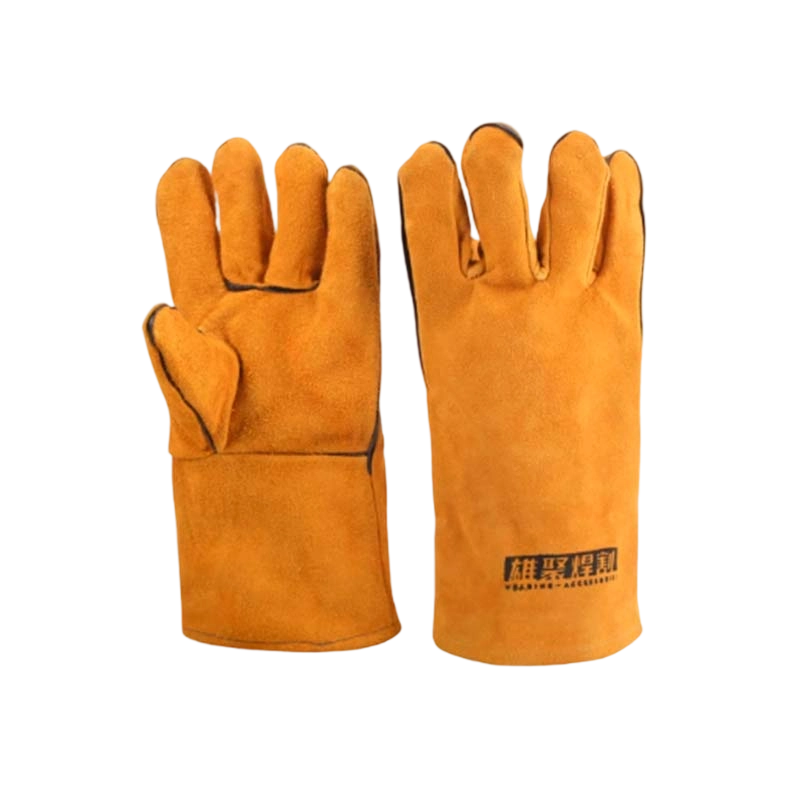
Elevate your safety and performance with our Heat-Resistant Cowhide Welding Gloves, meticulously...

Inside a Welding Goggles Factory A welding goggles factory is a fascinating space where safety meets precision. Workers and machines collaborate to produce goggles that protect eye...
READ MORETIG welding torch factories are central to supplying precise welding equipment for industrial, automotive, and construction applications. Production begins with careful selection o...
READ MOREA Welding Rod Supplier occupies a central position within the metal joining industry. Welding rods, also known as electrodes, form the core consumable element in many welding proce...
READ MOREHeat-Resistant Welding Gloves remain a fundamental part of equipment in fabrication shops, construction sites, and metal repair facilities. In environments where sparks fly and mol...
READ MOREHeat-resistant welding gloves are essential protective gear for welders, designed to shield hands from sparks, molten metal, and extreme heat. Made from durable materials such as cowhide, pigskin, goatskin, or Kevlar-lined leather, these gloves provide good heat resistance, durability, and comfort. Reinforced palms and fingers enhance protection, while flexible designs ensure dexterity for precise welding tasks. Suitable for MIG, TIG, and arc welding, they allow welders to work safely and efficiently.
Welding is a high-risk occupation that exposes workers to extreme heat, sparks, molten metal, and other hazards. Among the essential protective equipment, heat-resistant welding gloves play a crucial role in ensuring safety, comfort, and efficiency. These gloves protect hands from burns, abrasions, and heat stress while allowing sufficient dexterity for precision tasks.
Hands are one of the more vulnerable parts of a welder’s body. Without proper protection, exposure to high temperatures and molten metal can lead to severe burns, blisters, or long-term skin damage. Heat-resistant gloves provide a barrier between the skin and extreme heat, sparks, or sharp objects. Additionally, they improve grip and control over welding tools, increasing overall work efficiency and safety.
The choice of material is critical for balancing heat protection, flexibility, and durability. Common materials include:
Effective welding gloves have several critical features:
| Type | Material | Protection Level | Good Use |
| MIG/TIG Gloves | Cowhide, Pigskin | Medium to High | General MIG or TIG welding |
| TIG Precision Gloves | Goatskin, Thin Leather | Medium | TIG welding, fine work |
| High-Heat Gloves | Kevlar-Lined, Split Leather | Very High | Arc welding, heavy-duty tasks |
| General Work Gloves | Split Leather | Medium | Grinding, cutting, light welding |
Selecting the correct gloves depends on several factors:
Investing in high-quality gloves offers multiple advantages:
Heat-resistant welding gloves are an indispensable part of a welder’s protective gear. Choosing gloves made from appropriate materials with proper heat resistance, durability, and dexterity ensures both safety and productivity.

Email:
siogeewelding@gmail.com
Whatsapp:
+86 13305885557
Phone:
+86 17377705924
Get In Touch
Product Center
Get In Touch
