

 English
 中文简体
中文简体Don't hesitate to send a message
The Powerful Precision Plasma Cutting Machine redefines innovation for industrial applications, ...
Plasma cutting machines are advanced industrial tools designed for precision metal fabrication. These systems utilize a high-velocity jet of ionized gas, or plasma, to melt and remove material, creating clean, sharp cuts in electrically conductive materials such as steel, stainless steel, aluminum, copper, and brass. Widely utilized across manufacturing, construction, automotive, and DIY sectors, plasma cutters are valued for their efficiency, versatility, and ability to deliver high-quality results across varying material thicknesses.
These machines are categorized based on operational principles, power levels, portability, and application-specific features. Handheld Plasma Cutters are compact, lightweight units ideal for on-site or small-scale projects. They are favored for their maneuverability and ease of use, enabling operators to perform manual cutting tasks with little setup. CNC (Computer Numerical Control) Plasma Cutters, in contrast, integrate advanced software and automation. They are used in industrial environments for large-scale, repeatable operations, ensuring consistent accuracy and intricate pattern cutting on metal sheets or tubes. CNC systems often feature multi-axis capabilities, allowing for three-dimensional contours and automated material handling.
Another key distinction lies in power capacity, which determines the machine's cutting capabilities. Low-power models are suitable for thin materials and thin-gauge sheets, while high-power units can handle thicker plates and industrial-grade components. Additionally, machines are classified by power source, with options including 110V, 220V, or three-phase systems to accommodate different electrical infrastructure.
Specialized plasma cutters also address unique applications. Precision plasma machines offer enhanced cutting accuracy for detailed work, while dual-gas or water-injection models improve cut quality and reduce dross formation for cleaner edges. Some units integrate automatic height control to maintain good cutting distance, ensuring uniform results.
From basic workshop tools to sophisticated robotic systems, plasma cutting machines cater to diverse needs. Their integration of thermal precision and speed makes them indispensable for industries requiring durable, high-performance metal fabrication solutions. As technology evolves, these machines continue to integrate digital controls, ergonomic designs, and eco-friendly features, reinforcing their role as essential assets in modern metalworking.
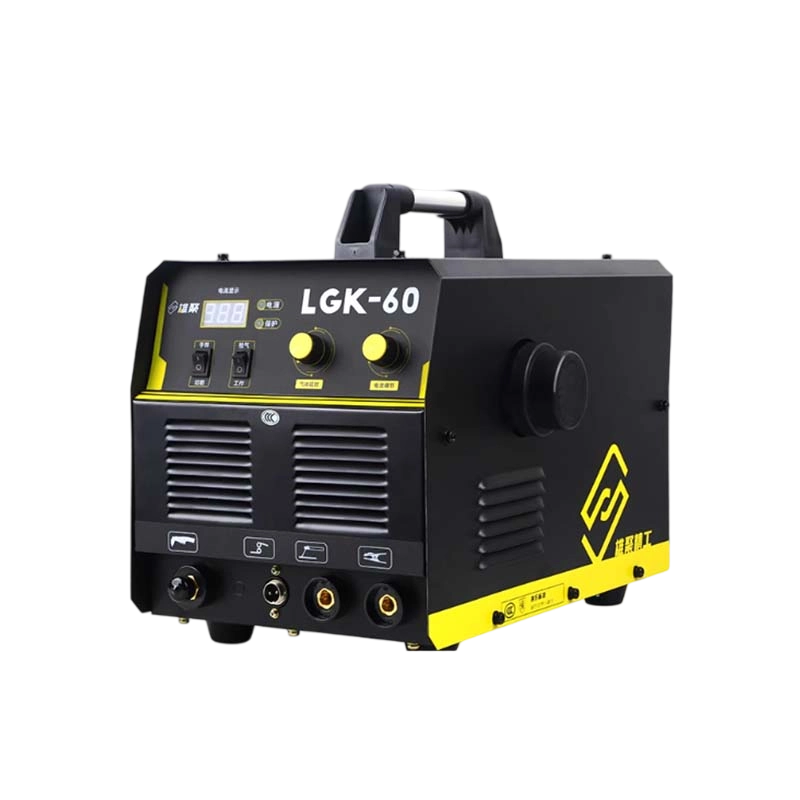
The Powerful Precision Plasma Cutting Machine redefines innovation for industrial applications, ...
Inside a Welding Goggles Factory A welding goggles factory is a fascinating space where safety meets precision. Workers and machines collaborate to produce goggles that protect eye...
READ MORETIG welding torch factories are central to supplying precise welding equipment for industrial, automotive, and construction applications. Production begins with careful selection o...
READ MOREA Welding Rod Supplier occupies a central position within the metal joining industry. Welding rods, also known as electrodes, form the core consumable element in many welding proce...
READ MOREHeat-Resistant Welding Gloves remain a fundamental part of equipment in fabrication shops, construction sites, and metal repair facilities. In environments where sparks fly and mol...
READ MOREAgainst the backdrop of continuous development in modern manufacturing, industrial cutting technology is undergoing significant upgrades. Plasma cutting machines, precision plasma cutting machines, and multi-axis plasma cutting machines are demonstrating their unique application value in various industries, providing greater flexibility and efficiency to manufacturing processes.
Plasma cutting machines, as fundamental equipment in industrial metal cutting, are widely used in the processing of thick steel plates, aluminum, and stainless steel plates. Their working principle is based on using a high-temperature electric arc to melt and rapidly blow away the metal, achieving fast cutting. Compared to traditional mechanical cutting methods, plasma cutting machines offer faster speed and greater operational flexibility, while maintaining high cutting quality across a variety of metal materials.
As industrial production demands both higher efficiency and precision, the stability and controllability of plasma cutting machines have become a key focus of research and development. Modern equipment, through optimized current output, cutting gas flow, and nozzle design, can maintain high-speed cutting while reducing the heat-affected zone at the cutting edge, thereby reducing the workload of subsequent grinding and processing.
In manufacturing fields requiring high-precision cutting, precision plasma cutting machines are gradually gaining attention. Compared to traditional plasma cutting equipment, precision models show significant improvements in control systems, cutting processes, and processing accuracy. Through the precise positioning of CNC systems, precision plasma cutting machines can achieve the processing of complex contours, meeting the high-standard processing requirements of precision molds and electronic product casings.
Furthermore, precision plasma cutting machines exhibit higher stability in cutting thickness, kerf straightness, and edge smoothness. For businesses, this means reduced secondary processing costs and improved overall product quality. Industry experts point out that with the optimization of processing control systems and the application of sensing technology, precision plasma cutting machines are showing a continuous trend of improvement in processing efficiency and material utilization.
Multi-axis plasma cutting machines are one of the technological hotspots in manufacturing in recent years. Unlike traditional plasma cutting machines, multi-axis models can perform cutting operations simultaneously in three or more axes, enabling the processing of complex curved surfaces and three-dimensional structures. This characteristic gives them potential application value in aerospace, shipbuilding, energy equipment, and the manufacturing of complex mechanical parts.
Multi-axis plasma cutting machines are usually equipped with flexible robotic arms and high-precision control systems, capable of adjusting the cutting path and angle according to different processing needs. Compared to single-plane cutting, multi-axis cutting offers advantages in reducing material waste, improving processing accuracy, and shortening production cycles. Furthermore, multi-axis systems are highly automated and can be seamlessly integrated into production lines, meeting the demands of modern industry for intelligent and flexible manufacturing.
Currently, the development trend of industrial cutting equipment shows a diversified and intelligent integration. The combination of plasma cutting technology, precision control technology, and multi-axis processing technology continuously optimizes equipment in terms of efficiency, accuracy, and flexibility. Companies can choose suitable cutting solutions based on different processing needs, achieving efficient production from simple sheet metal cutting to complex parts processing.
At the same time, the deep integration of industrial software and cutting equipment provides support for the intelligence of the equipment. Through CNC programming and path optimization, operators can develop reasonable cutting plans based on workpiece material, thickness, and shape, reducing human error and improving processing consistency. This intelligent trend not only improves production processes but also helps to enhance the overall competitiveness of enterprises.
Plasma cutting machines, precision plasma cutting machines, and multi-axis plasma cutting machines are increasingly being used in various industries. In the processing of structural steel for construction, plasma cutting machines provide efficient basic cutting solutions; in aerospace and high-precision mechanical parts manufacturing, precision plasma cutting machines can guarantee processing accuracy; while multi-axis plasma cutting machines demonstrate advantages in processing complex curved surfaces and three-dimensional structures.
From a market perspective, with the growing demand for intelligent, flexible, and efficient production in the manufacturing industry, the market potential of industrial cutting equipment continues to increase. While introducing new cutting equipment, companies are also exploring the combination of process optimization and digital management. In the future, this field is expected to form a development pattern where technological innovation and application expansion proceed in parallel.
The development of modern industrial cutting equipment not only focuses on efficiency and accuracy but also emphasizes environmental protection and operational safety. The exhaust gases, dust, and high-temperature metal splashes generated during plasma cutting and ion cutting processes require control through ventilation, dust collection, and protective devices. Precisely designed cutting machines play a vital role in reducing energy consumption, small material waste, and improving operational safety.
By optimizing cutting parameters, using environmentally friendly cutting gases, and employing supporting protective facilities, companies can reduce the environmental impact of production while ensuring the safety of operators. This not only aligns with the sustainable development concept of modern industrial production but also provides strong support for the promotion and application of the equipment.

Email:
siogeewelding@gmail.com
Whatsapp:
+86 13305885557
Phone:
+86 17377705924
Get In Touch
Product Center
Get In Touch
