

 English
 中文简体
中文简体Don't hesitate to send a message
The Robust Precision Mobility Laser Welding Machine redefines welding innovation by seamlessly c...
Laser welding machines represent a high-tech category of industrial equipment designed to achieve precise, high-quality joining of materials through the focused application of laser energy. These machines are widely utilized across manufacturing sectors due to their versatility, efficiency, and ability to produce clean, consistent welds with little thermal distortion. Laser welding technology employs a high-intensity laser beam to melt and fuse materials, offering distinct advantages over traditional welding methods such as arc welding or spot welding.
The primary classification of laser welding machines is determined by their operational principles and design configurations. By laser source, they are categorized into fiber lasers, solid-state lasers, diode lasers, and CO₂lasers, each tailored for specific material types and thicknesses. Fiber lasers, for instance, excel in welding metals like steel, aluminum, and stainless steel, while CO₂ lasers are often used for non-metallic materials or thicker sections. Mode of operation further divides the category into pulsed and continuous-wave (CW) systems. Pulsed lasers deliver controlled energy bursts, proper for delicate or thin materials, whereas CW systems sustain continuous output for high-speed, heavy-duty applications.
From an application perspective, laser welding machines are categorized into spot welders, seam welder, and multi-axis robotic systems. Spot welders focus on small, localized joins, commonly employed in electronics and medical device assembly. Seam welders, by contrast, produce continuous, linear welds, making them indispensable in automotive and sheet metal industries. Robotic systems integrate laser welding heads onto programmable arms, enabling complex 3D welds and automation for large-scale production lines.
Material compatibility also influences classification, as machines are optimized for metals (ferrous and non-ferrous), plastics, or composites. Advanced models incorporate laser hybrid welding, combining laser energy with additional methods like arc welding for enhanced versatility.
Safety and control features further define the category. Machines range from manual setups to fully automated systems with real-time monitoring, beam alignment tools, and environmental adaptability. Key applications span automotive, aerospace, electronics, jewelry, and medical device manufacturing, where precision and repeatability are critical.
In summary, laser welding machines are classified by laser technology, operational mode, application focus, and material compatibility, offering tailored solutions for diverse industrial needs. Their adoption continues to expand, driven by advancements in automation, precision, and material science.
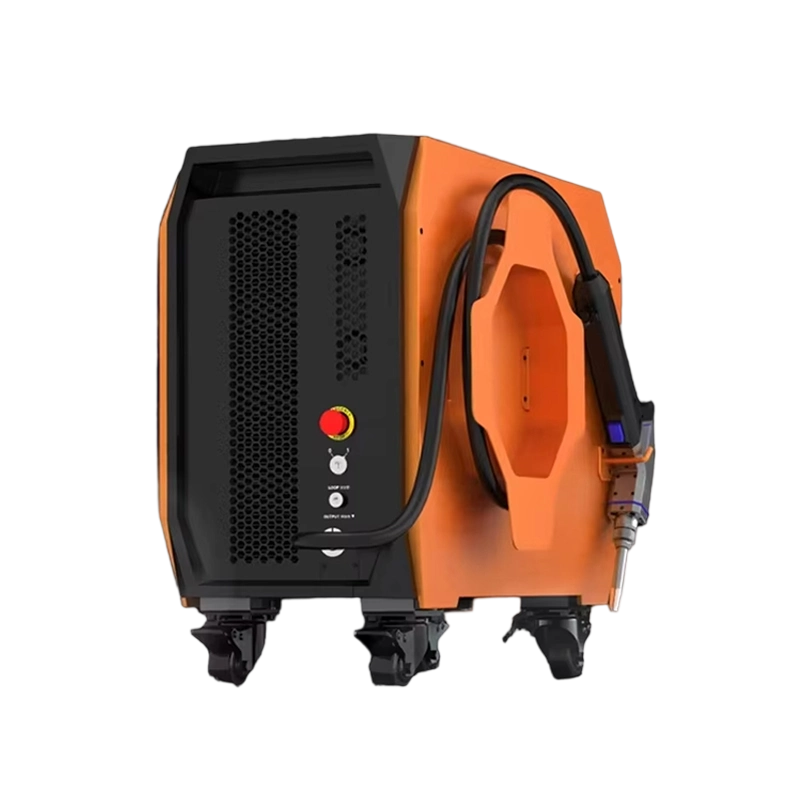
The Robust Precision Mobility Laser Welding Machine redefines welding innovation by seamlessly c...
Inside a Welding Goggles Factory A welding goggles factory is a fascinating space where safety meets precision. Workers and machines collaborate to produce goggles that protect eye...
READ MORETIG welding torch factories are central to supplying precise welding equipment for industrial, automotive, and construction applications. Production begins with careful selection o...
READ MOREA Welding Rod Supplier occupies a central position within the metal joining industry. Welding rods, also known as electrodes, form the core consumable element in many welding proce...
READ MOREHeat-Resistant Welding Gloves remain a fundamental part of equipment in fabrication shops, construction sites, and metal repair facilities. In environments where sparks fly and mol...
READ MORELaser welding technology is demonstrating its significant value in high-precision and high-efficiency processing. With the increasing variety of materials and the growing demand for complex structures, laser welding equipment is constantly evolving towards precision and mobility. Precision laser welding machines and mobile laser welding machines have become a focus for manufacturing companies, providing flexible and efficient welding solutions for industries such as automotive, electronics, and mechanical parts.
Laser welding machines utilize a high-energy laser beam to rapidly heat and melt the metal surface, achieving precise welding. Compared with traditional welding methods, laser welding machines have the characteristics of a small heat-affected zone, neat welds, and faster processing speed. They are suitable for a variety of metal materials, including steel, aluminum, stainless steel, copper, and high-strength alloys, and can perform stably in the processing of thin to medium-thick plates.
Modern industrial production demands increasingly higher welding precision and efficiency, making automated control and process optimization of laser welding machines a key development direction. Through digital control systems, the equipment can monitor welding parameters in real time, such as laser power, welding speed, and focal position, thus ensuring consistent weld quality. With this technology, manufacturing companies can reduce rework rates and small material waste in mass production.
In the fields of medical devices, precision molds, and electronic product manufacturing, the demand for high-precision welding is particularly prominent. Precision laser welding machines are specifically designed to meet this demand, achieving micron-level welding positioning through high-precision optical systems and CNC control. Compared with traditional welding equipment, precision laser welding machines can achieve high-quality welding on small workpieces, complex contours, and thin sheet materials.
In addition, precision laser welding machines demonstrate significant advantages in weld flatness, hole spacing accuracy, and heat-affected zone control. The equipment is usually equipped with a real-time monitoring system that can automatically adjust laser parameters to cope with changes in material thickness or surface conditions. For businesses, this means reduced secondary processing and human intervention in high-standard production, improving production efficiency and product consistency.
The emergence of mobile laser welding machines provides convenience for large equipment, on-site maintenance, and distributed production. Unlike fixed laser welding equipment, mobile models can be flexibly moved between different workstations or production lines, enabling on-site welding and localized repairs. It is widely used in ship repair, construction machinery, pipeline welding, and large-scale steel structure processing.
Mobile laser welding machines are typically equipped with lightweight robotic arms or adjustable brackets, allowing them to adapt to different working angles and operating spaces. Simultaneously, the combination of a portable control system and precise positioning technology ensures high welding quality during mobile welding. For on-site operations, mobile welding equipment can reduce workpiece handling and production downtime, thereby improving overall efficiency.
The development of laser welding technology shows a trend towards intelligence, precision, and multi-functional integration. The application of precision laser welding machines and mobile laser welding machines, combined with industrial software and CNC systems, provides manufacturing companies with flexible and efficient welding solutions. Through digital process planning, operators can determine reasonable welding parameters based on material type, workpiece structure, and production rhythm, achieving processing consistency and big efficiency.
Furthermore, the integration of precision and mobile technologies also enables customized processing. Companies can select suitable welding equipment for specific workpiece structures or on-site repair needs, reducing material waste and production costs. The combination of technological upgrades and practical applications allows laser welding equipment to play an even more important role in modern industrial production.
The application scenarios of laser welding machines are continuously expanding. In the automotive manufacturing sector, precision laser welding machines are used for welding thin sheets and high-strength components of car bodies, ensuring smooth welds and structural strength; in aerospace and precision instrument manufacturing, high-precision welding guarantees strict tolerance requirements for component assembly; mobile laser welding machines provide flexible solutions in on-site maintenance of large equipment, steel structure welding, and pipeline engineering.
Market research shows that with manufacturing companies' pursuit of production flexibility and high-quality standards, the demand for precision and mobile laser welding equipment is increasing year by year. While improving welding quality, companies are also exploring process optimization, intelligent management, and innovative on-site welding modes, driving the overall technological level of the industry.
During laser welding, high-energy laser beams and high-temperature metals may pose safety risks; therefore, modern equipment places great emphasis on safety protection in its design. Laser protective covers, optical filters, operating area isolation, and fume purification systems are all necessary supporting measures. Precision and mobile laser welding equipment pays more attention to ergonomics and automated control in its operational safety design to reduce operating risks. In terms of environmental protection, laser welding offers higher material utilization and produces less welding waste and pollution compared to traditional welding methods. With the help of integrated exhaust, filtration, and dust collection systems, the equipment can effectively reduce its impact on the production environment, meeting the requirements of modern industrial sustainable development.

Email:
siogeewelding@gmail.com
Whatsapp:
+86 13305885557
Phone:
+86 17377705924
Get In Touch
Product Center
Get In Touch
