
 English
 中文简体
中文简体
Engineered for good performance in demanding industrial environments, the Professional Orange Weldin...
TIG welding is known for clean, precise joins on metals like stainless steel and aluminum. But behind every steady hand and smooth arc is a carefully made tool: the torch. A TIG welding torch factory takes raw components and turns them into a device that welders trust for hours of delicate work. This article looks at how such a factory operates, what goes into a torch, and why small details make a real difference.
From Raw Parts To A Working Torch
Walking through a TIG welding torch factory, you will see rows of workstations. One area handles the torch body — usually made from heat‑resistant plastic or durable composites. Another section deals with the copper or brass head that holds the collet and tungsten electrode. Workers or automated machines cut, shape, and assemble these parts. A typical TIG welding torch factory produces several sizes. Smaller torches are for light sheet metal work. Larger ones handle thicker materials.
The assembly process starts with the head. This part must hold the tungsten electrode firmly while allowing gas to flow evenly. A TIG welding torch factory often uses precision machining to create the gas passages. Then the head is attached to the handle. Inside the handle runs the gas hose, power cable, and sometimes a water cooling line. For water‑cooled torches, the factory adds a second hose that circulates coolant. Air‑cooled torches rely on fins or ventilation holes to dissipate heat. Both designs have their place in different shops.
The Importance Of Cable Flexibility
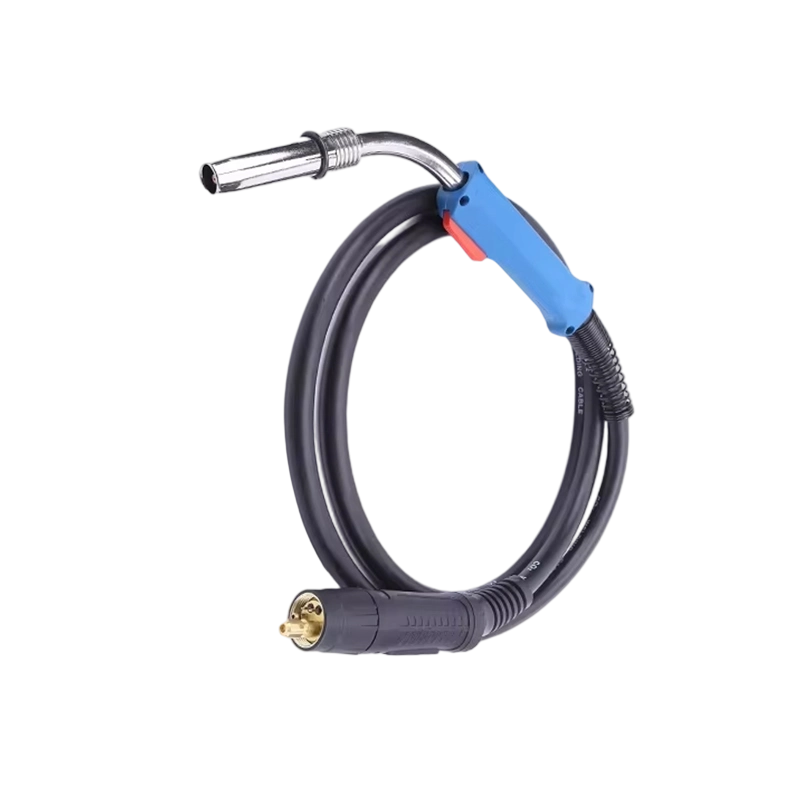
A TIG welding torch is connected to a power source by a cable assembly. This cable carries welding current, shielding gas, and (for water‑cooled models) coolant. A good TIG welding torch factory pays attention to how flexible these cables are. Stiff cables make the torch hard to move, especially in tight spaces. Factories test different rubber compounds and copper strand counts to find a balance between durability and bendability. The result is a torch that follows your hand without fighting back.
Different Torch Styles For Different Hands
Not every welder holds the torch the same way. A TIG welding torch factory may produce several styles. There are standard rigid torches, flexible head torches where the angle can be adjusted, and even water‑cooled models with a bendable neck. Some factories also make a “gas lens” version. A gas lens improves gas coverage around the weld pool. The factory adds a fine mesh screen inside the torch head. This small change helps produce cleaner welds, especially on materials like titanium or stainless steel. Welders appreciate having options.
Materials That Make Sense
A TIG welding torch factory chooses materials based on how they perform. The head is often brass or copper because these metals conduct electricity and heat well. The handle uses high‑temperature plastics like nylon or fiberglass‑reinforced resin. These materials do not become slippery when hot. The insulation around the power cable is usually silicone or neoprene — flexible and heat resistant. The factory buys these materials from suppliers and then shapes them into finished parts. Nothing is random. Each material serves a purpose.
Why The Factory Matters To Welders
For a welder, a reliable torch makes the job smoother. When you buy a torch from a TIG welding torch factory with consistent processes, you know what to expect. The torch will fit your hand. The cable will bend without kinking. The gas flow will be even. These are not flashy features, but they matter on a long welding day. A TIG welding torch factory does not need to claim it is the greatest. The proof is in the welds — clean, consistent, and free from trouble. And that is exactly what a good torch helps you achieve.