
 English
 中文简体
中文简体
Engineered for good performance in demanding industrial environments, the Professional Orange Weldin...
Core Functions of a Welding Torch Manufacturer
A Welding Torch Manufacturer stands at the center of metal joining industries that require controlled heat and stable flame or arc performance. Welding torches act as essential tools in construction, automotive assembly, machinery production, and infrastructure projects. Behind each torch lies a production process that combines metal fabrication, insulation technology, and ergonomic design.
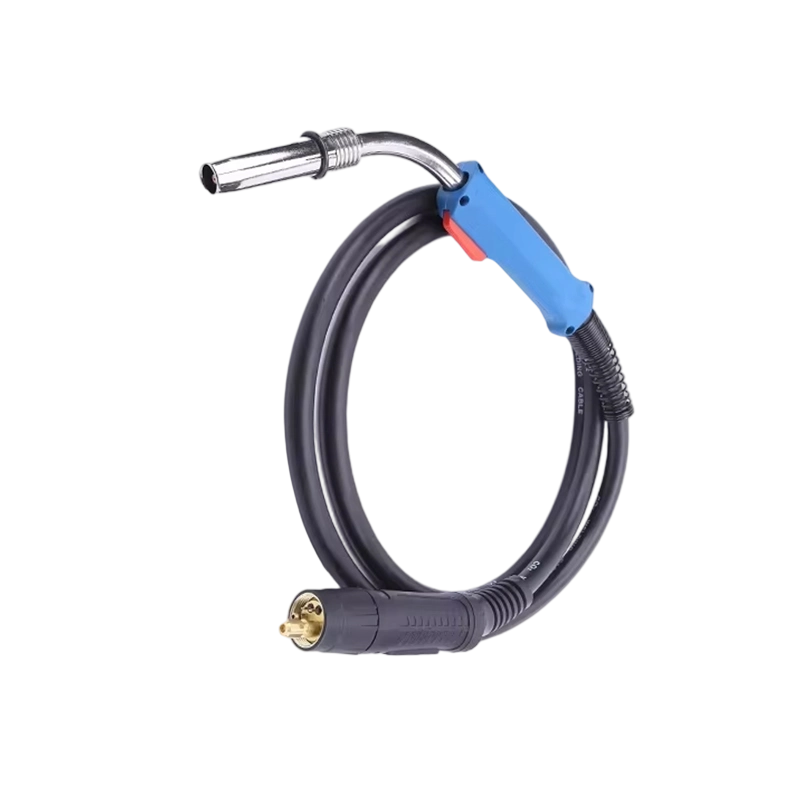
Welding torches vary depending on process type. Gas welding torches use fuel gases and oxygen to create adjustable flames suitable for light fabrication and repair tasks. MIG and TIG torches operate within electric arc systems, guiding filler material and shielding gas to form stable weld pools. A Welding Torch Manufacturer typically offers multiple product categories to serve these distinct applications.
Manufacturing involves precision machining of connectors, nozzles, and internal channels that guide gas or current. Consistency in these components ensures stable flow and arc control. Assembly lines integrate hoses, handles, and trigger mechanisms to complete the torch structure. Quality inspection stages evaluate alignment, sealing integrity, and electrical continuity.
Product Design and Technical Considerations
Design decisions influence both user experience and welding outcomes. Handle shape affects grip stability during prolonged tasks. Flexible neck designs enable access to narrow joints and angled seams. A Welding Torch Manufacturer may offer interchangeable neck options to accommodate varied project requirements.
Material selection shapes torch performance. Copper alloys provide conductivity for current transfer. Heat-resistant polymers insulate handles and reduce surface temperature exposure. Reinforced cables protect internal wiring and gas lines during repeated movement across shop floors.
Some Welding Torch Manufacturer facilities incorporate automated assembly stations to maintain uniform output. Calibration equipment checks electrical continuity and gas channel alignment before final packaging. These processes contribute to consistency across production batches.
Aesthetic elements also influence market perception. Color-coded handles differentiate amperage ranges. Branding marks engraved on torch bodies support distributor recognition. Presentation may seem secondary to function, yet it shapes purchasing decisions in competitive markets.
Industrial Applications Across Sectors
Welding torches operate in environments ranging from small repair garages to expansive steel fabrication plants. Construction companies rely on torches to assemble structural frameworks. Automotive manufacturers use robotic welding systems equipped with specialized torches for body panel assembly.
A Welding Torch Manufacturer often collaborates with equipment integrators that design automated welding cells. These systems require torches capable of consistent arc stability under repetitive motion. In manual welding settings, portability and comfort play a stronger role.
Shipbuilding facilities represent another application area. Large metal sections demand high-capacity welding equipment capable of sustained output. In contrast, craft workshops may focus on decorative metalwork where precision and fine control matter more than output volume.
Global distribution networks connect manufacturers to regional wholesalers and end users. Trade events and industrial exhibitions provide venues to demonstrate welding performance and ergonomic features. Product demonstrations often emphasize arc stability and ease of handling.
Business Strategy and Market Position
A Welding Torch Manufacturer balances engineering expertise with market responsiveness. Competitive pricing structures depend on material costs, production scale, and distribution partnerships. Some manufacturers concentrate on high-volume industrial clients, while others focus on mid-sized workshops and regional distributors.
Reputation builds gradually through consistent output and dependable delivery timelines. Industrial buyers often value stability in supply relationships, particularly when welding torches form part of integrated production systems.
Across fabrication sectors, welding remains fundamental to assembly and construction. The Welding Torch Manufacturer contributes equipment that shapes joints, frameworks, and machinery components. Behind each weld seam stands a torch engineered to deliver controlled energy and dependable performance in demanding industrial settings.