
 English
 中文简体
Engineered for good performance in demanding industrial environments, the Professional Orange Weldin...
Understanding the Main Components of a Welding Torch
Different welding processes require different torch structures. MIG welding torches, TIG welding torches, and plasma cutting torches each have their own component arrangements and operating principles.
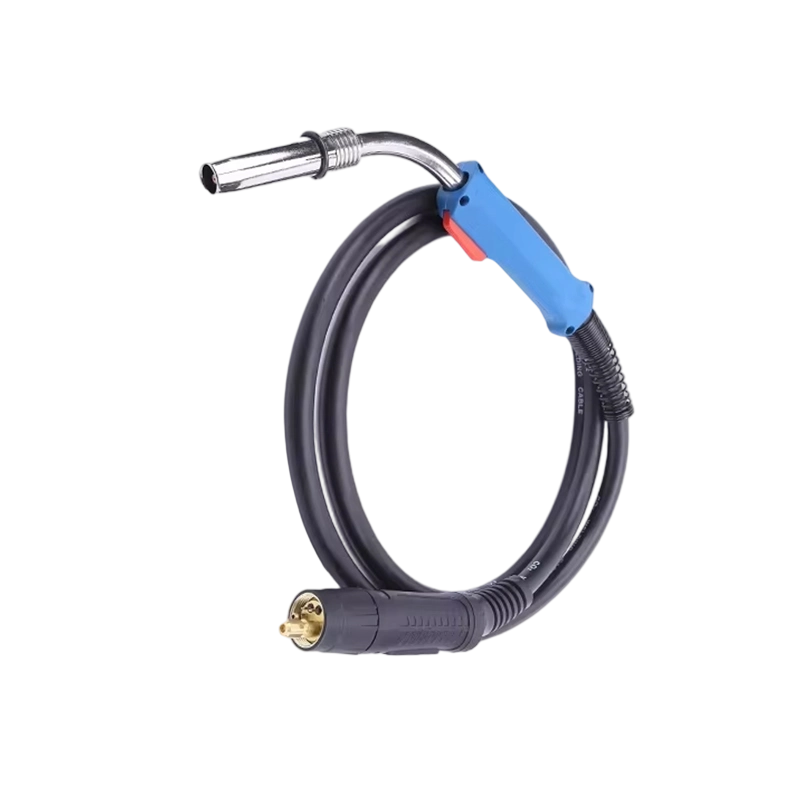
A MIG torch typically includes a handle, trigger, contact tip, nozzle, liner, and cable assembly. The wire passes through the liner toward the contact tip, where electrical contact is established. The nozzle directs shielding gas around the welding area.
TIG torches use a different configuration. Their main components include a handle, torch head, tungsten electrode, collet, collet body, and ceramic nozzle. These components work together to support the electrode and direct shielding gas.
Plasma cutting torches contain an electrode, nozzle, swirl ring, and other internal components that help control the plasma arc. Their structure is developed around the requirements of the cutting process.
A professional Welding Torch Manufacturer needs to understand these structural differences before developing a product range.
Material Selection Influences Torch Performance
Material selection affects the strength, heat resistance, weight, and handling characteristics of welding torches.
Copper and copper alloys are commonly used in conductive components such as contact tips and certain internal fittings. Their electrical conductivity makes them suitable for parts involved in current transmission.
Brass is another material used for connectors and fittings. It offers machinability and corrosion resistance, making it useful for components that require threaded connections or precise dimensions.
Stainless steel may be selected for specific structural parts, while engineering plastics and heat-resistant rubber are frequently used in handles, insulation components, and cable coverings.
The handle deserves particular attention because it is the main contact point between the operator and the equipment. Its shape, surface texture, and weight distribution influence grip comfort and handling.
An experienced Welding Torch Manufacturer evaluates these materials according to the function of each component rather than using one material throughout the entire assembly.
Why Torch Design Goes Beyond Appearance
The external appearance of a welding torch is only one aspect of its design. Internal structure, component compatibility, and ease of handling also influence the finished product.
Cable flexibility is one example. A suitable cable construction allows the torch to move more naturally during operation. The connection between the cable and handle also needs to correspond to the overall torch structure.
The trigger position is another design consideration. Its location and operating feel can influence how conveniently the torch is handled.
For TIG torches, the torch head angle, nozzle dimensions, and electrode arrangement are closely related to the working process. MIG torch designs may focus on handle geometry, consumable compatibility, and cable configuration.
These details give a Welding Torch Manufacturer opportunities to develop different product specifications for equipment brands and industrial distributors.
OEM and ODM Services for Welding Equipment Brands
Customized manufacturing plays an important role in the welding equipment industry. Different brands may require their own product appearance, connection configurations, packaging, and component specifications.
OEM services can include customized logos, handle colors, cable lengths, connector types, and product packaging. ODM cooperation may involve developing a new torch structure or adjusting an existing design based on technical drawings and project requirements.
For buyers planning a product range, it is useful to discuss whether different torch models can share selected components. This can help create a more coordinated product series while maintaining the required differences between models.
A capable Welding Torch Manufacturer can coordinate design development, component sourcing, machining, molding, and final assembly according to the agreed product specifications.