
 English
 中文简体
中文简体
Engineered for good performance in demanding industrial environments, the Professional Orange Weldin...
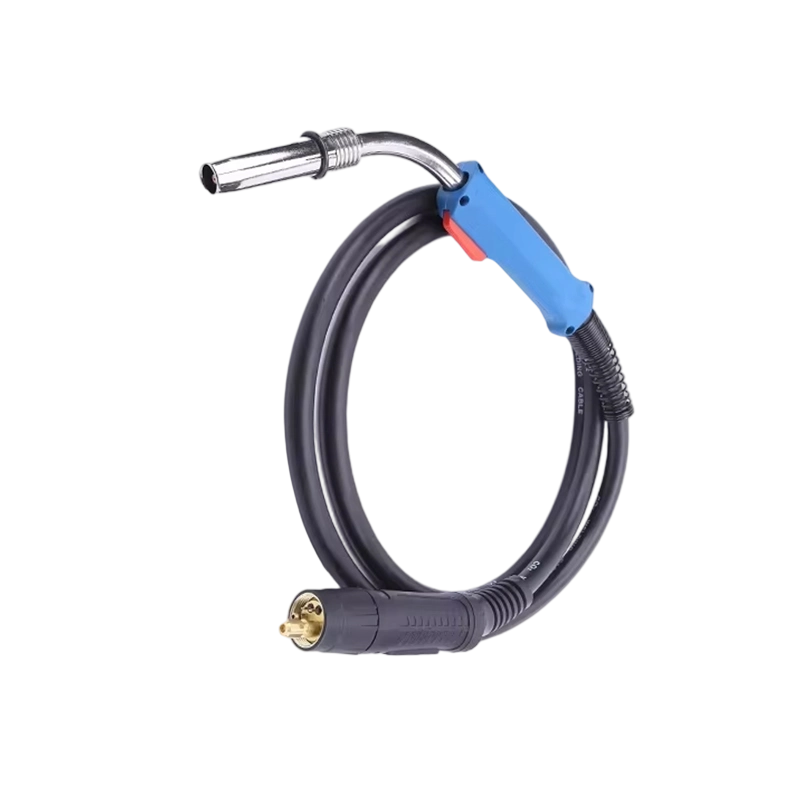
Sourcing welding equipment for a production line or a distribution business usually starts with one question: which welding torch manufacturer can meet both technical specs and order volume. Torches look simple from the outside, but the parts inside — nozzles, contact tips, gas diffusers, cable assemblies — all affect how consistent the weld quality turns out to be on the shop floor.
Why Torch Design Matters to Buyers
A welding torch is more than a handle and a tip. The way gas flows through the head, how heat is managed along the neck, and how the cable connects to the power source all influence how long a torch lasts under daily use. For buyers placing bulk orders, small design differences between suppliers can translate into noticeable differences in downtime and replacement part orders over a production cycle.
Torches generally fall into a few main categories, and each one serves a different type of work:
| Torch Type | Typical Use | Common Buyer |
| MIG Torch | General fabrication, sheet metal | Manufacturing plants, job shops |
| TIG Torch | Precision welding, thin materials | Aerospace suppliers, workshops |
| Plasma Cutting Torch | Metal cutting, shape profiling | Metal fabricators, distributors |
| Air-Cooled Torch | Lower amperage, shorter cycles | Small workshops, repair shops |
| Water-Cooled Torch | Higher amperage, longer cycles | Heavy industrial production lines |
What Buyers Typically Look For
When comparing a welding torch manufacturer, procurement teams tend to focus on a handful of practical points rather than marketing claims:
- Compatibility — whether the torch fits existing power sources and consumables already in use on the line
- Consistency — how uniform each unit is across a production batch, since inconsistent parts create rework
- Customization — whether OEM or ODM requests (cable length, connector type, handle shape) can be accommodated
- Lead time — how order size affects turnaround, particularly for bulk or repeat orders
- Communication — how clearly a supplier documents specs, tolerances, and packaging requirements
These points matter more in day-to-day sourcing decisions than general branding, since they directly affect how smoothly a torch integrates into an existing production setup.
Working Directly With a Manufacturer
Buyers who work directly with a welding torch manufacturer, rather than through multiple layers of distribution, often find it easier to communicate technical requirements clearly. This can include requesting specific handle ergonomics, adjusting cable insulation for certain environments, or matching connector types to existing equipment. Direct communication also tends to simplify sample testing and batch confirmation before a full order is placed.
For OEM and ODM buyers in particular, this kind of direct relationship makes it easier to align torch specifications with the rest of a product line, especially when torches are being bundled with welding machines or sold under a private label.
Matching a Manufacturer to Production Needs
Not every welding torch manufacturer serves the same type of buyer. Some focus on smaller, workshop-scale orders with faster turnaround, while others are set up for higher-volume industrial contracts with longer production runs. Buyers evaluating suppliers generally benefit from clarifying their own production scale, torch type requirements, and customization needs before comparing quotes, since this narrows the field to suppliers whose capabilities genuinely match the order in question.
Taking time to align these details upfront tends to reduce back-and-forth later in the sourcing process and helps set clear expectations on both sides before production begins.